

Mental health challenges affect millions of people worldwide, and while professional care is essential, nature offers powerful allies in our wellness journey. Medicinal herbs have been supporting human mental health for thousands of years, and modern research continues to validate many traditional uses. Here are five evidence-based ways to naturally boost your mental health using the healing power of plants.
1. Calm Your Mind with Gentle Nervine Herbs
When anxiety feels overwhelming, certain herbs can provide natural relief by soothing your nervous system. Chamomile, lavender, and lemon balm are three of the most effective calming herbs, each working through different mechanisms to ease stress and tension.
Chamomile is perhaps the most well-known relaxation herb. Its active compounds, particularly apigenin, bind to benzodiazepine receptors in the brain, producing mild sedative effects without the side effects of pharmaceutical options. Research shows that regular chamomile tea consumption can significantly reduce anxiety symptoms and improve sleep quality.

Lavender works through your sense of smell and can be used topically or as aromatherapy. Studies demonstrate that lavender essential oil can reduce cortisol levels and promote relaxation within minutes. Try adding a few drops to your pillow or diffusing it in your bedroom before sleep.
Lemon balm, a member of the mint family, has been used since the Middle Ages to reduce stress and improve mood. It works by increasing GABA activity in the brain, helping to quiet racing thoughts and promote a sense of calm.
Daily Integration Tips:
- Start your morning with chamomile tea instead of coffee if anxiety is high
- Keep lavender essential oil handy for stressful moments
- Add fresh lemon balm to smoothies or herbal tea blends
- Create a calming evening ritual with any combination of these herbs
2. Lift Your Mood with Natural Antidepressants
Several herbs have shown remarkable effectiveness in supporting mood and addressing mild to moderate depression. Two standout options are saffron and St. John's wort, both backed by impressive research.
Saffron, the golden spice from crocus flowers, has been the subject of over 20 clinical studies showing it can be as effective as conventional antidepressants for mild to moderate depression. The active compounds crocin and safranal appear to work by modulating serotonin, dopamine, and norepinephrine levels in the brain.
St. John's wort has a long history of use for "melancholia" and modern research supports its traditional use. Multiple studies show it can be as effective as prescription antidepressants for mild to moderate depression, with fewer side effects. However, it can interact with medications, so professional guidance is essential.
Daily Integration Tips:
- Use saffron as a culinary spice in rice dishes, teas, or milk-based drinks
- Consider standardized saffron supplements (30mg daily is the research-supported dose)
- Consult with a healthcare provider before using St. John's wort, especially if taking other medications
- Be patient – mood-supporting herbs typically take 4-6 weeks to show full effects
3. Build Resilience with Adaptogenic Herbs
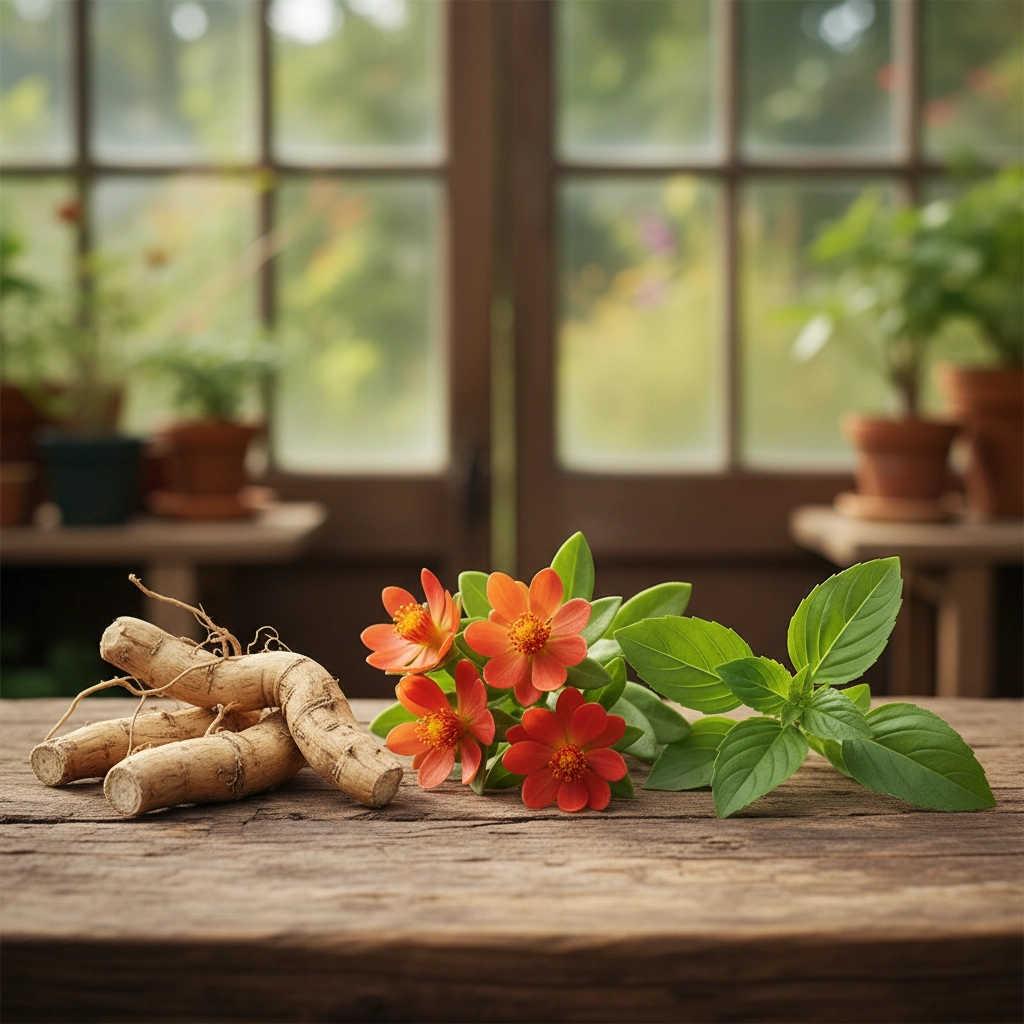
Adaptogens are a special class of herbs that help your body adapt to stress and maintain balance. Unlike stimulants that provide temporary energy, adaptogens work gradually to build your stress resilience over time. Three powerful adaptogens for mental health are ashwagandha, rhodiola, and holy basil.
Ashwagandha is perhaps the most researched adaptogen, with studies showing it can reduce cortisol levels by up to 30% and significantly improve stress-related symptoms including anxiety, fatigue, and sleep problems. This ancient Ayurvedic herb helps regulate your hypothalamic-pituitary-adrenal (HPA) axis, which controls your stress response.
Rhodiola rosea grows in harsh Arctic conditions, and this hardy plant passes its resilience on to us. Research shows rhodiola can improve mental performance under stress, reduce fatigue, and enhance mood. It's particularly helpful for people experiencing burnout or chronic stress.
Holy basil (tulsi) is revered in Ayurveda as a sacred plant that promotes longevity and well-being. Studies show it can lower cortisol levels, reduce anxiety, and improve overall stress resilience. Unlike regular basil, holy basil has adaptogenic properties that make it ideal for daily use.
Daily Integration Tips:
- Take ashwagandha with meals to improve absorption and reduce potential stomach upset
- Use rhodiola in the morning as it can be energizing
- Enjoy holy basil as a caffeine-free tea throughout the day
- Start with lower doses and gradually increase as your body adapts
- Cycle adaptogens (use for 6-8 weeks, then take a 1-2 week break)
4. Restore Your Sleep and Nervous System
Quality sleep is fundamental to mental health, yet many people struggle with insomnia and restless sleep. Certain herbs excel at promoting deep, restorative sleep while supporting overall nervous system health.
Valerian root is one of the most studied sleep herbs, with research showing it can help you fall asleep faster and improve sleep quality without morning grogginess. Unlike sleeping pills, valerian doesn't disrupt natural sleep cycles and can be used long-term without developing dependency.
Passionflower is another gentle but effective sleep aid that also helps with anxiety. Clinical studies show it can improve sleep quality comparable to pharmaceutical sleep aids but with fewer side effects. It works by increasing GABA levels in the brain, promoting relaxation and reducing mental chatter.
German chamomile, beyond its daytime anxiety benefits, makes an excellent bedtime tea. Its mild sedative properties help transition your body and mind from the activity of the day to restful sleep.
Daily Integration Tips:
- Create a bedtime routine with herbal tea 30-60 minutes before sleep
- Combine valerian with other relaxing herbs like chamomile or lavender
- Keep passionflower tea bags by your bedside for middle-of-the-night wakefulness
- Avoid screens and stimulating activities while drinking your evening herbal tea
- Be consistent – sleep herbs work best when used regularly
5. Sharpen Your Mind with Cognitive-Supporting Herbs
Mental health isn't just about mood – cognitive function, memory, and mental clarity are equally important for overall well-being. Several herbs offer powerful support for brain health and cognitive performance.
Ginkgo biloba is one of the most researched herbs for cognitive function. It improves blood flow to the brain, enhances oxygen delivery, and provides antioxidant protection to brain cells. Studies show it can improve memory, concentration, and mental clarity, especially in older adults.
Rosemary contains compounds that may boost acetylcholine, a neurotransmitter crucial for memory and learning. Research suggests that even the aroma of rosemary can improve cognitive performance and alertness. The antioxidants in rosemary also protect brain cells from oxidative damage.
Turmeric, specifically its active compound curcumin, offers powerful neuroprotective benefits. It can cross the blood-brain barrier to reduce inflammation in the brain, support the production of brain-derived neurotrophic factor (BDNF), and may help prevent cognitive decline.
Green tea contains L-theanine, an amino acid that promotes calm alertness. Unlike caffeine alone, L-theanine with caffeine provides sustained energy and focus without jitters or crashes. It also increases alpha brain waves associated with relaxed concentration.
Daily Integration Tips:
- Add fresh rosemary to cooking or enjoy rosemary tea
- Include turmeric in smoothies, curries, or golden milk lattes
- Replace some coffee with green tea for gentler, sustained energy
- Consider standardized ginkgo supplements if you're over 40
- Use herbs that enhance cognitive function during demanding mental tasks

Making It Work for You
The beauty of herbal medicine lies in its gentleness and compatibility with your daily routine. Unlike pharmaceutical interventions that often work immediately but with side effects, herbs build wellness gradually and sustainably. Here are some key principles for success:
Start slowly: Begin with one or two herbs rather than trying everything at once. This allows you to notice what works best for your unique needs.
Be consistent: Herbs work best with regular use over time. Think of them as nutritional support for your mental health rather than quick fixes.
Quality matters: Choose organic, high-quality herbs from reputable sources. At AEtherbal, we're committed to sourcing the finest botanical ingredients for optimal effectiveness.
Listen to your body: Pay attention to how different herbs make you feel and adjust accordingly. What works for others may not work the same way for you.
Professional guidance: While herbs are generally safe, they can interact with medications and aren't appropriate for everyone. Consult with a healthcare provider, especially if you're taking prescription medications or have serious mental health concerns.
Remember, herbs are powerful allies in your mental wellness journey, but they work best as part of a holistic approach that includes good nutrition, regular exercise, adequate sleep, and professional support when needed. By incorporating these five strategies into your daily routine, you can harness the ancient wisdom of plant medicine to support your modern mental health needs.
The path to better mental health doesn't have to rely solely on synthetic solutions. Nature has provided us with remarkable tools for healing and wellness – we just need to know how to use them wisely.
These statements have not been evaluated by the Food and Drug Administration. This product (or remedy) is not intended to diagnose, treat, cure, or prevent any disease. Please consult with your physician or qualified health care provider before starting any herbal remedy or supplement.
Latest posts

The Parkinson's-Pesticide Connection: What You Need to Know & How to Protect Yourself
Read article
Strong Roots, Strong Heart: How Herbs + Lifestyle Support Cardiovascular Wellness
Read article
Hibiscus: The Vibrant Secret to a Happy Heart and Balanced Blood Sugar
Read article