

You've probably walked past it a hundred times without giving it a second thought. That low-growing plant with the scalloped leaves creeping through your lawn or garden bed? There's a good chance it's ground ivy, and it's way more interesting than you might think. Or maybe, like me, you rip it out of your garden to keep it from spreading and over taking everything! Here in my neck of the woods we call it creeping Charlie.
Ground ivy (Glechoma hederacea) goes by many names: gill-over-the-ground, creeping charlie, alehoof, and catsfoot, just to name a few. While modern gardeners often see it as a pesky weed, this unassuming member of the mint family has been valued as a medicinal herb for centuries. Let's dig into what makes this backyard plant worth a closer look.
What Is Ground Ivy?
Ground ivy is an aromatic, evergreen perennial that belongs to the mint family (Lamiaceae). If you've ever encountered it, you'll recognize its distinctive kidney or fan-shaped leaves with rounded, toothed edges. The leaves are typically about an inch across and sit on characteristic square stems, a telltale sign of the mint family.
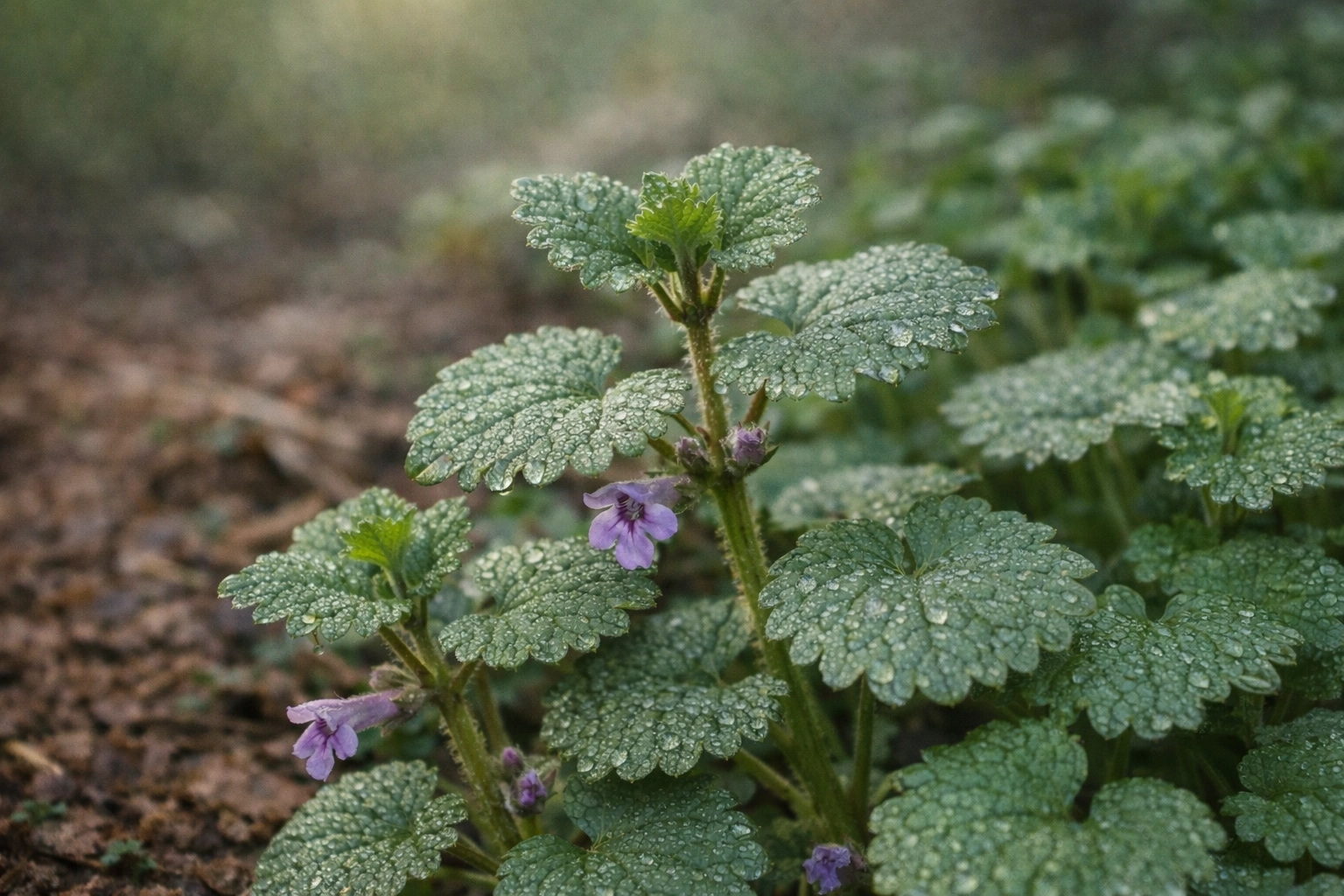
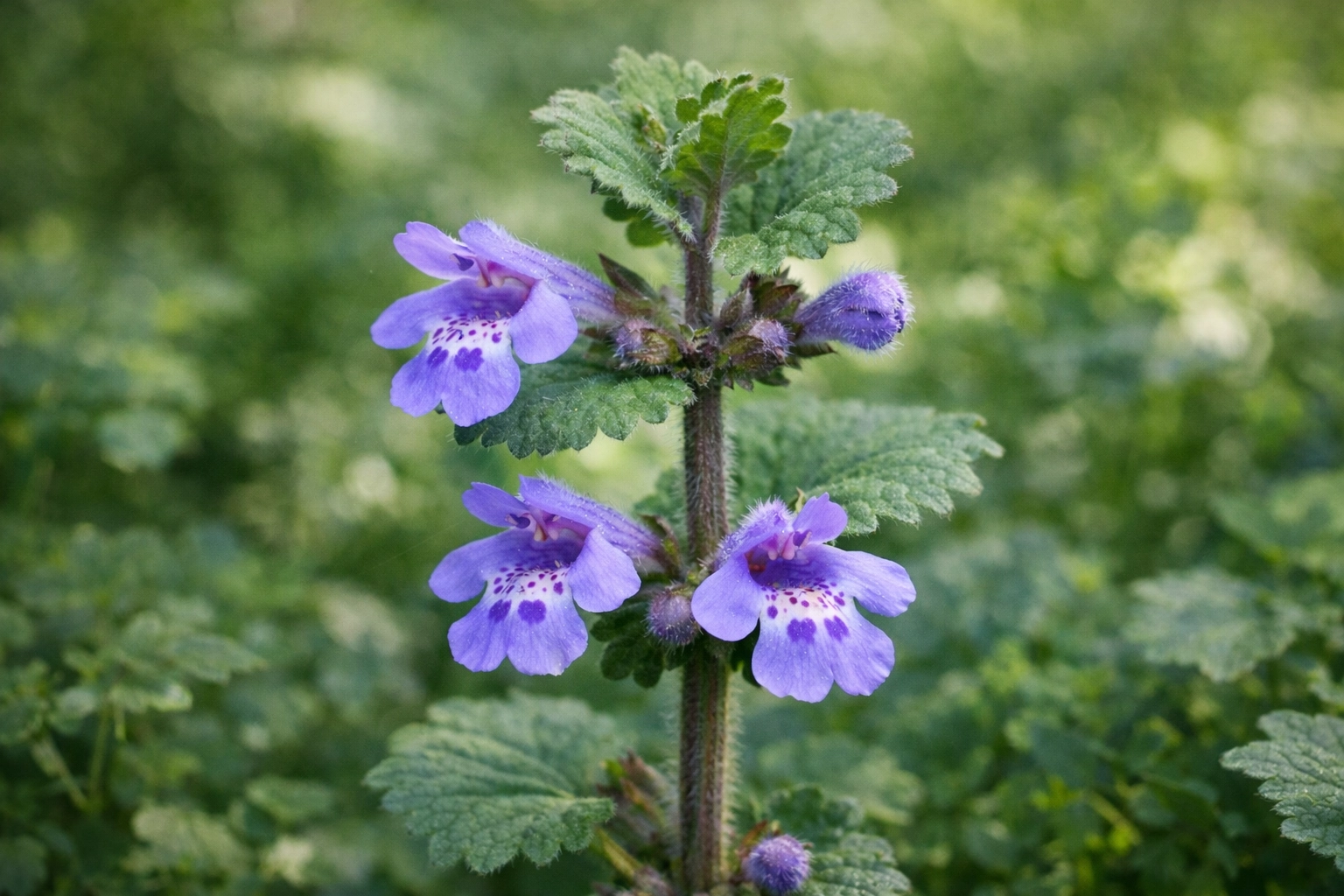
From April through July, ground ivy produces clusters of small blue to bluish-violet flowers that emerge from where the leaves meet the stem. The plant spreads enthusiastically through runners (stolons) that creep along the ground and root at the nodes, forming dense evergreen mats. While it typically stays under a foot tall, it can spread anywhere from one to three feet, depending on growing conditions.
Ground ivy thrives in moist, shaded areas but adapts surprisingly well to sun. It's tough enough to survive regular mowing and can establish itself in lawns, gardens, wooded areas, and even between paving stones. This resilience is part of what has allowed it to naturalize across much of North America, despite being originally native to Europe and Asia.
A Rich History of Traditional Use
Ground ivy has been used medicinally for centuries, particularly in European herbal traditions. The name "alehoof" hints at one of its most famous historical uses: before hops became the standard flavoring and preservative for beer, ground ivy was commonly added to ale. It helped clarify, flavor, and preserve the brew while adding a slightly bitter, aromatic quality.
Beyond the brewery, herbalists valued ground ivy for a wide range of health concerns. Traditional uses included treating respiratory conditions, digestive complaints, and kidney ailments. The herb was considered particularly useful for conditions involving inflammation and excess mucus.
Traditional Medicinal Uses
Respiratory Support
One of ground ivy's primary traditional uses has been for respiratory complaints. Herbalists used it to address coughs, bronchitis, asthma, and other conditions involving congestion in the lungs and airways. The herb was thought to help break up and expel mucus while soothing inflamed tissues.
Ground ivy tea was commonly prepared for people dealing with chronic coughs or stubborn respiratory infections. The aromatic compounds in the plant, along with its slightly astringent properties, made it a go-to remedy for clearing congestion.
Digestive Aid
Traditional herbalists also turned to ground ivy for various digestive issues. It was used to stimulate appetite, ease indigestion, and support overall digestive function. The herb's bitter compounds may help trigger digestive secretions, which can improve the breakdown and absorption of nutrients.
Some traditions used ground ivy for more serious gastrointestinal concerns, including ulcers and inflammatory bowel conditions. While we need modern research to validate these uses, the anti-inflammatory properties found in many mint family members suggest there might be something to these traditional applications.
Kidney and Urinary Health
The name "gill" in some of ground ivy's common names comes from the Old French word for a beer fermentation vessel, but in herbal traditions, "gill" was also associated with kidney remedies. Ground ivy was traditionally used as a mild diuretic to support kidney function and address urinary tract concerns.
Herbalists employed it for conditions like cystitis (bladder inflammation), kidney stones, and general urinary sluggishness. The idea was that ground ivy could help flush the urinary system while providing soothing, anti-inflammatory effects.
Wound Healing and Skin Conditions
Externally, ground ivy has been used as a poultice or wash for wounds, bruises, and various skin conditions. Traditional applications included treating ulcers, abscesses, and hemorrhoids. The fresh, crushed leaves were applied directly to affected areas, or the herb was prepared as a wash or compress.
Some traditions also used ground ivy for treating conjunctivitis and other eye inflammations, though this requires extreme caution and should never be attempted without proper preparation and guidance from a qualified practitioner.
Tinnitus and Ear Issues
An interesting traditional use for ground ivy involves tinnitus (ringing in the ears) and other ear-related problems. The herb was sometimes prepared as an ear oil or used in steam inhalations for ear congestion. This particular use showcases how versatile herbalists considered ground ivy to be.
Active Compounds and Properties
While traditional use tells us what herbalists believed ground ivy could do, modern analysis gives us some clues about why it might work. Ground ivy contains several bioactive compounds, including:
Volatile oils give the plant its aromatic quality and may contribute to its expectorant and antimicrobial properties.
Flavonoids are plant compounds with antioxidant and anti-inflammatory effects that appear throughout the mint family.
Tannins provide astringent properties, which can help tone tissues and reduce excessive secretions.
Bitter compounds stimulate digestive function and may support the breakdown of fats and proteins.
Triterpenes are compounds that may have anti-inflammatory and immune-modulating effects.
These constituents work together to create the herb's overall effect, which traditional herbalists describe as cooling, drying, and gently stimulating.
How Ground Ivy Was Traditionally Prepared
Tea or Infusion
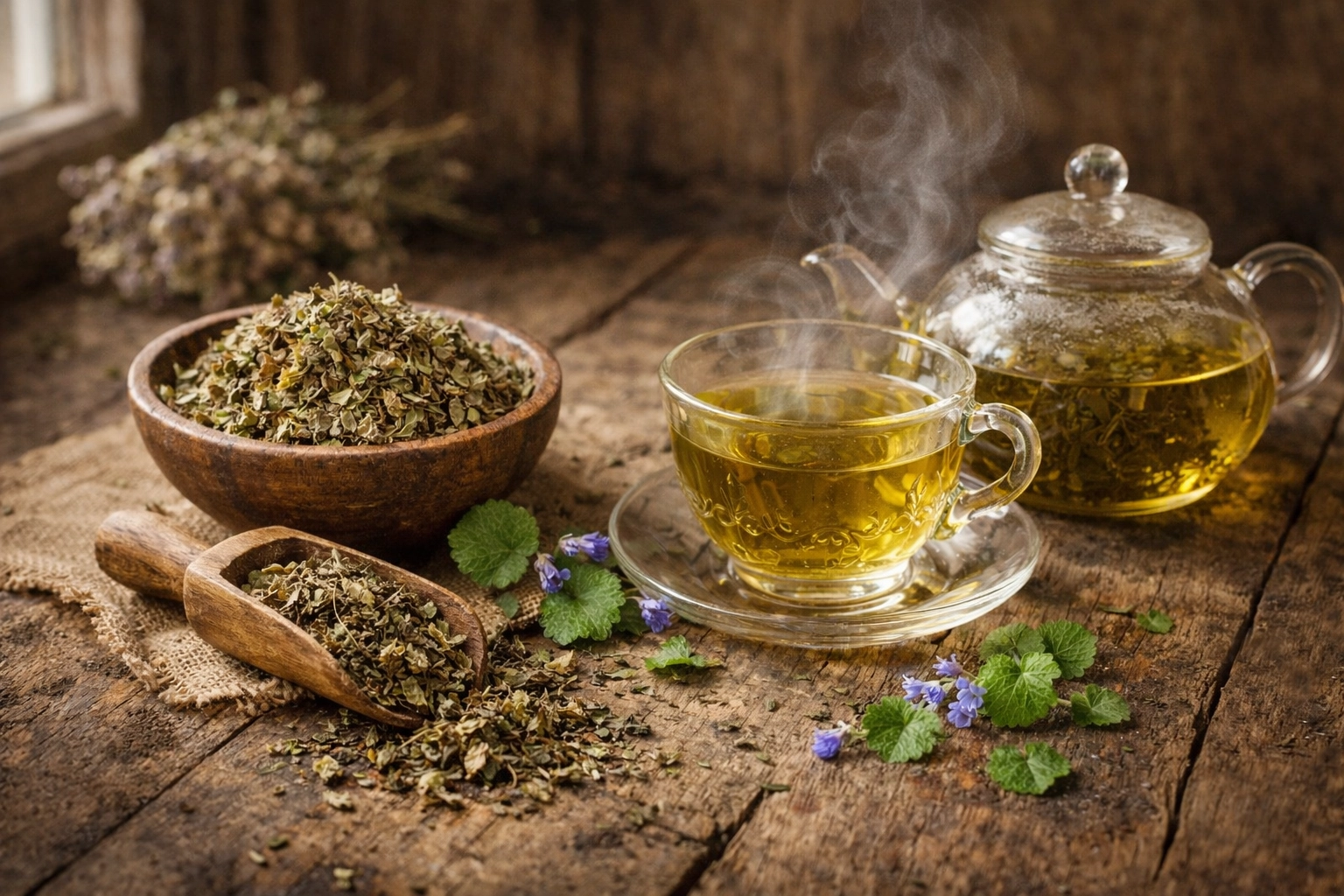
The most common preparation was a simple tea made from fresh or dried leaves. Herbalists would steep about one to two teaspoons of the dried herb (or a small handful of fresh leaves) in hot water for 10-15 minutes. This tea could be consumed up to three times daily for respiratory or digestive support.
Tincture
For longer-term storage and more concentrated dosing, ground ivy was prepared as an alcohol extract (tincture). This allowed the active compounds to be preserved and made the herb more convenient to take regularly.
Poultice
For external use, fresh ground ivy leaves were crushed or bruised and applied directly to wounds, skin irritations, or areas of inflammation. Sometimes the leaves were mixed with a bit of water to form a paste.
Juice
Fresh ground ivy juice was sometimes extracted and used either internally or externally. The fresh plant was crushed and pressed to obtain the juice, which was considered particularly potent for acute conditions.
Modern Considerations and Safety
While ground ivy has a long history of traditional use, there are some important things to keep in mind if you're considering using this herb.
Potential Side Effects
Ground ivy is generally considered safe when used in moderation, but some people may experience:
- Skin irritation from handling the fresh plant
- Upset stomach or nausea if consumed in large amounts
- Allergic reactions, particularly in people sensitive to other members of the mint family
Important Warnings
Pregnancy and breastfeeding: There isn't enough reliable information about the safety of ground ivy during pregnancy or while nursing, so it's best to avoid it during these times.
Liver concerns: Some sources suggest that very high doses over extended periods might affect liver function, though this is based more on theoretical concerns than documented cases.
Medication interactions: Ground ivy may interact with diuretic medications, diabetes medications, or drugs metabolized by the liver. Always check with your healthcare provider.
Identification Is Crucial
If you're planning to harvest ground ivy from the wild, make absolutely certain you've correctly identified it. While it has fairly distinctive features, there are other plants that could be confused with it if you're not careful. When in doubt, consult with an experienced forager or herbalist, or purchase the dried herb from a reputable supplier.
Growing Your Own Ground Ivy
Despite its reputation as an invasive plant in gardens, you might actually want to cultivate ground ivy in a controlled area. It makes an excellent ground cover in shady spots where other plants struggle, and having a medicinal herb growing right in your yard can be incredibly convenient.
Plant ground ivy in moist, well-drained soil in a shaded to partly shaded location. Be aware that it will spread aggressively if given the chance, so consider growing it in containers or in an area where you can manage its expansion. The plant is virtually maintenance-free once established and can even tolerate occasional mowing.
You can also use ground ivy as an edible addition to your diet. The leaves have a mild, slightly bitter flavor and can be added to salads, soups, or cooked as a pot herb. Just remember to harvest from areas that haven't been treated with pesticides or herbicides.
The Bottom Line
Ground ivy is one of those herbs that perfectly illustrates how something commonplace can have hidden depths. What many people dismiss as a lawn weed has served as a trusted medicinal plant for centuries, addressing everything from stubborn coughs to digestive troubles.
While we need more modern scientific research to fully understand and validate all of ground ivy's traditional uses, its long history of safe use by herbalists suggests there's real value in this unassuming plant. If you're interested in exploring herbal remedies, ground ivy offers an accessible starting point, literally as close as your backyard.
Just remember that herbs are powerful tools that deserve respect. Start with small amounts, pay attention to how your body responds, and always consult with qualified practitioners, especially if you're dealing with serious health conditions or taking medications.
The next time you spot that creeping plant with the kidney-shaped leaves in your yard, you might see it a little differently. Sometimes the most valuable remedies are the ones right under our feet.
Please consult with your physician prior to starting any herbal remedy. These statements are not meant to diagnose, treat, or cure any illness.
Latest posts

The Parkinson's-Pesticide Connection: What You Need to Know & How to Protect Yourself
Read article
Strong Roots, Strong Heart: How Herbs + Lifestyle Support Cardiovascular Wellness
Read article
Hibiscus: The Vibrant Secret to a Happy Heart and Balanced Blood Sugar
Read article
