

In Traditional Chinese Medicine (TCM), the concept of "Shen" goes far beyond what Western medicine might call mental health. The Shen represents your spirit, your heart-mind, and the very essence of who you are. It's the center of your presence, joy, clarity, and emotional resilience. When your Shen becomes disturbed, life can feel pretty rough – think insomnia, anxiety, feeling disconnected from others, or that nagging sense that something's just "off."
For over 3,000 years, Chinese medicine practitioners have been using specific herbs to help calm and nourish the Shen. Today, let's explore some of the most important herbs and formulas that can help restore balance when your spirit feels out of sorts.
What Does "Disturbed Shen" Actually Look Like?
Before diving into the herbs, it's helpful to understand what disturbed Shen looks like in real life. You might experience:
- Trouble falling asleep or staying asleep
- Feeling anxious or restless for no clear reason
- A sense of disconnection from yourself or others
- Lack of joy or meaning in daily activities
- Mental fog or difficulty concentrating
- Feeling emotionally numb or overwhelmed
- That "tired but wired" feeling
In TCM theory, these symptoms often stem from imbalances like Heart Qi deficiency, Liver Qi stagnation, or what's called "phlegm misting the mind." The good news? There are time-tested herbal allies that can help.
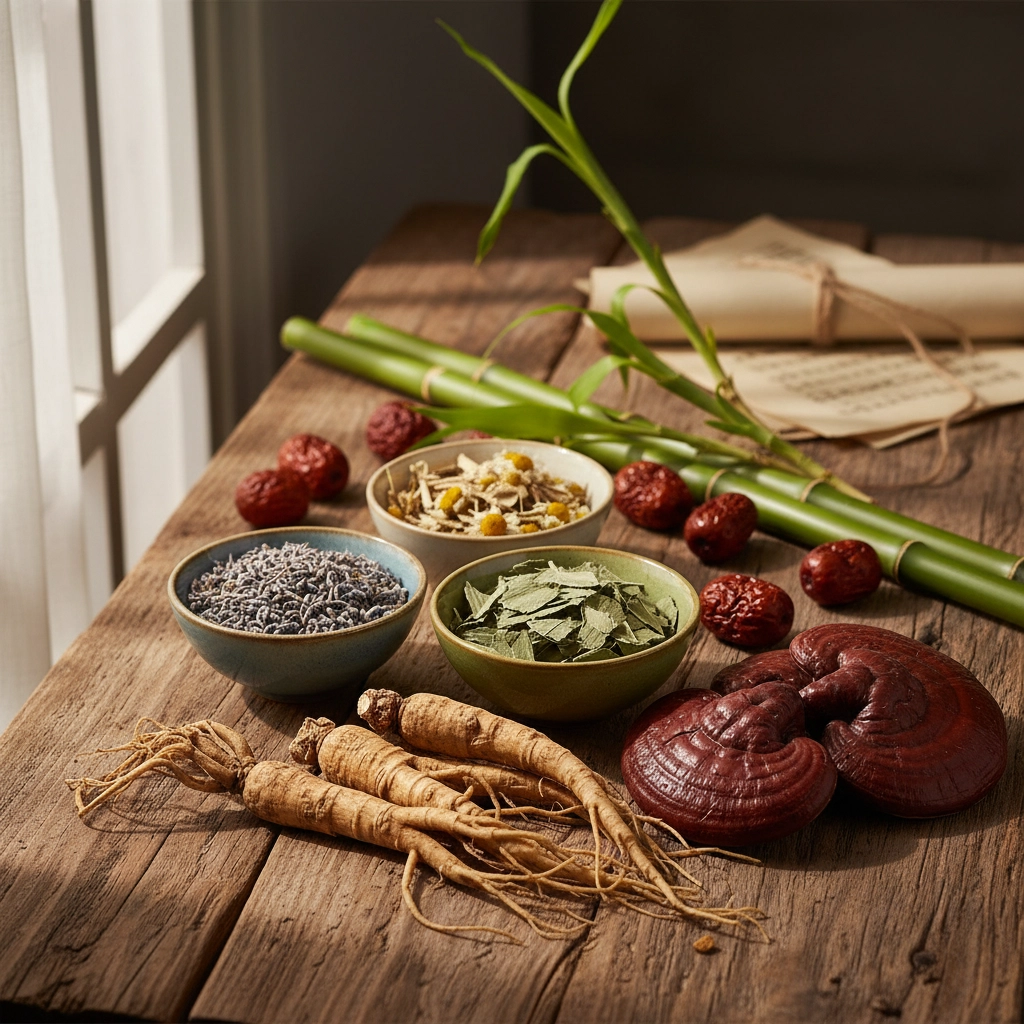
Key Herbs for Calming the Shen
Ginseng (Ren Shen) - The Spirit Stabilizer
Ginseng is probably the most famous herb for supporting the Shen. Classical TCM texts describe it as an herb that "quiets the consciousness, settles the Hun and Po (ethereal and corporeal souls), arrests palpitations with anxiety, opens the Heart, and strengthens resolve."
This sweet, slightly warming herb works by supplementing what TCM calls the "five viscera" – essentially strengthening your core organ systems. When your foundational energy is strong, your spirit naturally becomes more stable and resilient.
Reishi Mushroom (Ling Zhi) - The Mushroom of Immortality
Reishi has been called the "mushroom of immortality" for good reason. It's particularly valuable for long-term Shen nourishment, helping to settle anxiety while promoting mental clarity. Unlike some calming herbs that can make you feel drowsy, Reishi tends to create a calm alertness that's perfect for meditation or focused work.
Polygala (Yuan Zhi) - The Mind Opener
This bitter, spicy herb has a special talent for "opening the Heart orifices" and clearing mental fog caused by what TCM calls "phlegm misting the mind." If you've ever felt like your thoughts are cloudy or you can't quite access your usual mental sharpness, Polygala might be exactly what you need.
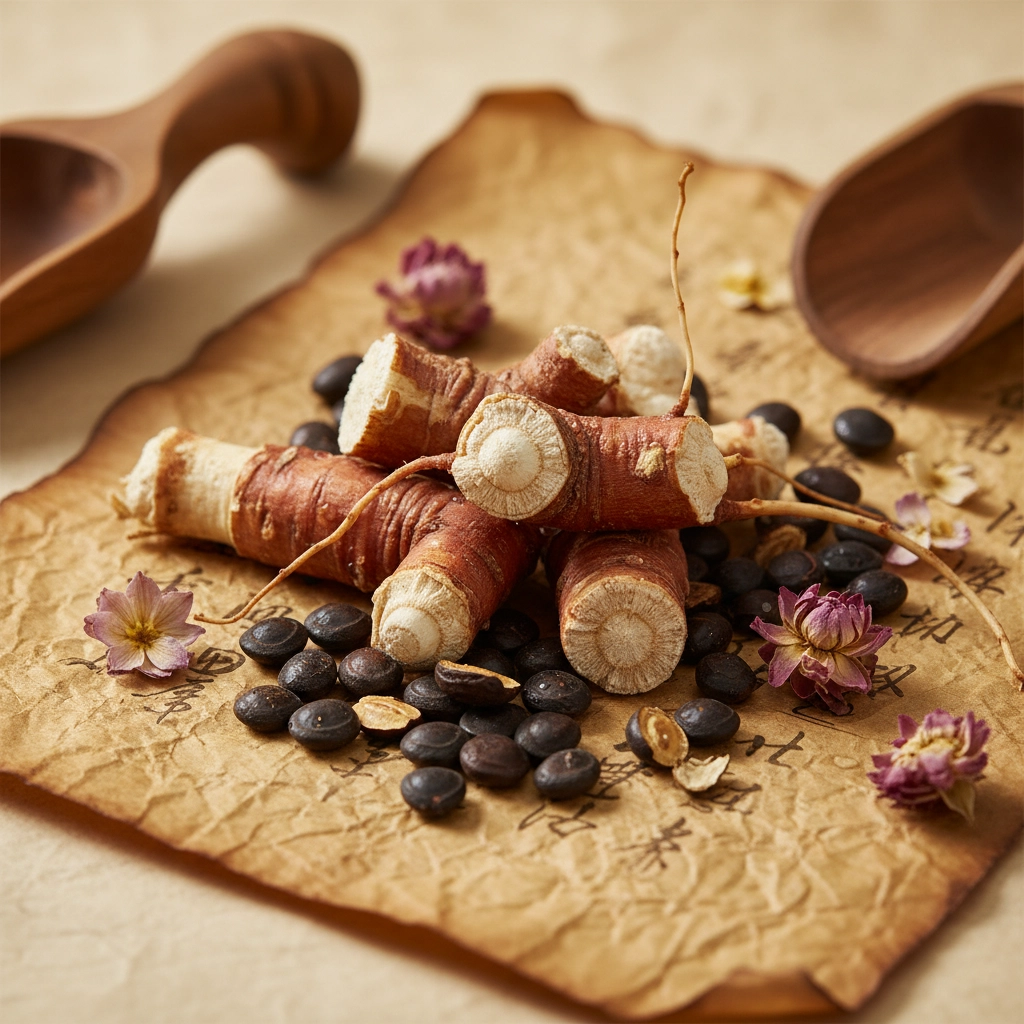
Sour Jujube Seed (Suan Zao Ren) - The Sleep Supporter
Sour jujube seed is a go-to herb for insomnia and restlessness. It works by nourishing Heart Yin – essentially providing the cooling, calming energy that helps your mind settle down at night. Many people find it particularly helpful for that "tired but wired" feeling that keeps you tossing and turning.
Albizzia (He Huan Pi) - The Happiness Bark
Known as the "happiness bark," Albizzia is like nature's mood lifter. It works primarily by resolving Liver Qi stagnation – basically helping stuck energy flow freely again. When your emotional energy moves smoothly, you naturally feel lighter and more optimistic.
Classical Formulas That Work
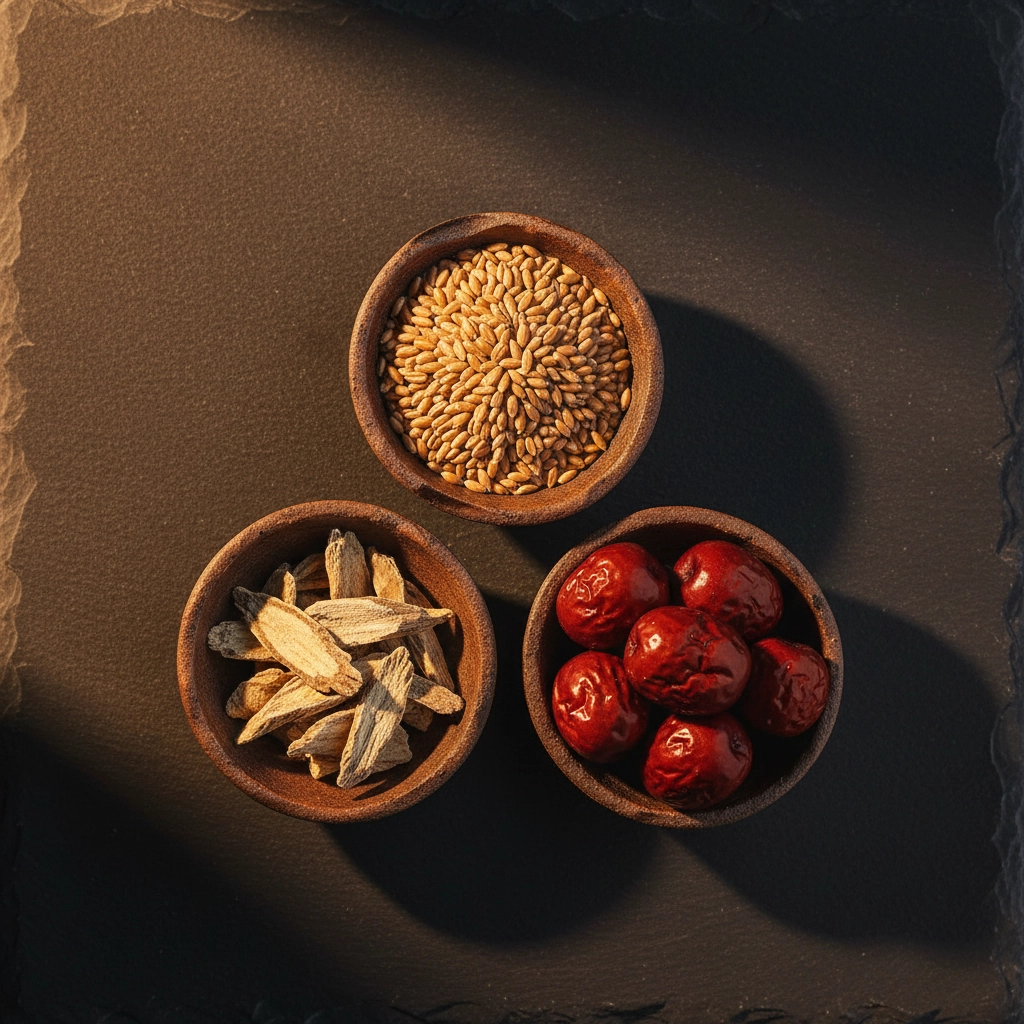
Gan Mai Da Zao Tang - The Simple But Powerful Trio
This formula contains just three ingredients: wheat, licorice, and jujube dates. Despite its simplicity, it's incredibly effective for emotional instability and what we might call "feeling scattered." The formula nourishes both Qi and Blood while helping to anchor the spirit.
Modern practitioners often enhance this basic formula by adding herbs like:
- Fu Ling (Poria) for additional calming effects
- He Huan Pi (Albizzia) for mood support
- Ye Jiao Teng (Polygonum vine) for better sleep
An Shen Ding Zhi Wan - The Six-Herb Calmer
This formula specifically targets disturbed Shen with six carefully chosen herbs that work together to calm the spirit, nourish the Heart, and tranquilize an overactive mind. It's particularly useful when anxiety and mental restlessness are the main concerns.
Tian Wang Bu Xin Dan - The Emperor's Heart Formula
This more complex formula contains fifteen herbs and is designed for deeper constitutional imbalances. It's especially helpful when disturbed Shen is accompanied by symptoms like night sweats, hot flashes, or feeling "burned out." The formula works by nourishing both Heart and Kidney Yin – essentially replenishing your deepest reserves.
How These Herbs Actually Work
From a TCM perspective, Shen-calming herbs work through several mechanisms:
Tonification: Many of these herbs strengthen your fundamental energy reserves. When you're not running on empty, your nervous system naturally becomes more resilient.
Clearing Obstruction: Some herbs, like Polygala and Shi Chang Pu (Sweet Flag), help clear what TCM calls "phlegm" – not just physical mucus, but energetic blockages that cloud mental clarity.
Regulating Flow: Herbs like Albizzia help stuck energy move freely again. In TCM theory, many emotional problems stem from energy that's gotten "stuck" and needs help flowing smoothly.
Nourishing Essence: The deepest-acting herbs work on what's called "Jing" – your constitutional reserves. When these are strong, your Shen naturally becomes more stable.
Modern Applications and Considerations
Today's TCM practitioners often combine traditional formulas with modern insights. For example, they might use herbs traditionally used for "Heart fire" to help with what we'd recognize as anxiety disorders, or combine Shen-calming herbs with adaptogenic mushrooms for stress resilience.
Many people find that TCM herbs for disturbed Shen work particularly well when combined with practices like:
- Regular meditation or mindfulness
- Gentle exercise like tai chi or yoga
- Consistent sleep schedules
- Stress management techniques

The beauty of the TCM approach is that it doesn't just suppress symptoms – it works to restore the underlying balance that allows your natural calm and clarity to emerge.
A Holistic Approach
What makes TCM herbs for Shen disturbances special is their holistic nature. Rather than targeting just one neurotransmitter or brain region, they work to restore balance throughout your entire system. They recognize that your emotional well-being is intimately connected to your physical health, energy levels, and even your spiritual sense of purpose.
These herbs don't work like pharmaceutical medications that kick in within hours. Instead, they tend to create gradual, sustainable changes over weeks or months of consistent use. Many people report that they not only feel calmer but also more like themselves – more present, more connected, and more resilient in the face of life's inevitable challenges.
The tradition of using herbs to support the Shen reminds us that taking care of our mental and emotional well-being isn't just about managing symptoms – it's about nurturing the very essence of who we are.
Please consult with your physician prior to starting any herbal remedy. These statements are not meant to diagnose, treat, or cure any illness.
Latest posts

The Parkinson's-Pesticide Connection: What You Need to Know & How to Protect Yourself
Read article
Strong Roots, Strong Heart: How Herbs + Lifestyle Support Cardiovascular Wellness
Read article
Hibiscus: The Vibrant Secret to a Happy Heart and Balanced Blood Sugar
Read article